Spinning
It is the transformation of fiber to produce yarn.

It is the transformation of fiber to produce yarn.
– see Warp and Weft –
Textile yarn is the result of spinning. The threads are worked, intertwined with the help of a loom to obtain a fabric. The yarn is a single-twisted (a single and unique yarn with no twist) or double-twiwted (interlacing of at least two threads together to obtain a single yarn.)
A vector file guarantees printed image quality because it does not depend on resolution and doesn’t lose any of its properties when enlarged or reduced. Vector files have .ai – .eps – .pdf – .svg extensions. This type of file is required and indispensable for quality printing.
Synthetic fiber is entirely made from chemical components derived from oil. Some names: polyamide, polyester, acrylic, chlorofiber.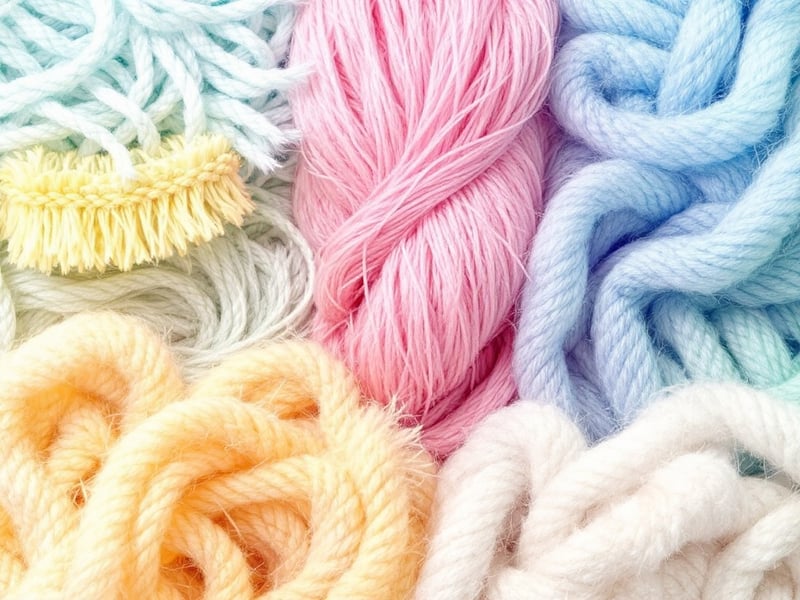
Plant fiber has two origins: plant or animal.
Plant fiber is mainly made of cellulose and extracted from either seeds (cotton, kapok,) stems and roots (linen, hemp, jute,) leaves (abaca, sisal) or sap (rubber.)
Animal fiber is mostly made of proteins and comes from certain mammals’hair (alpaca, angora, cashmere, wool, mohair, vicuna…) or silk made by silkworms.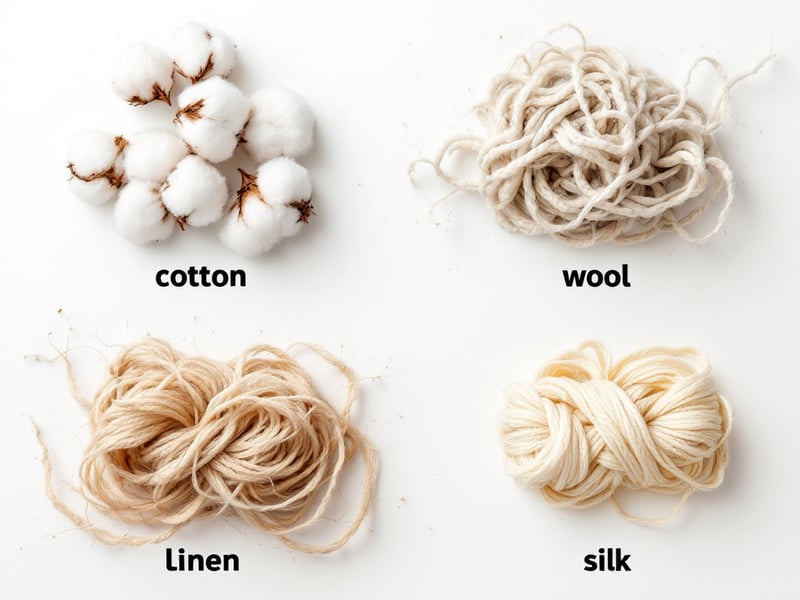
Artificial fiber is made from cellulose obtained from cotton seeds or wood through the appropriate chemical treatment. Continuous (rayon, viscose) or discontinuous fibers (fibranne) are thus obtained.
Fiber is a slender and elongated natural or synthetic filament. There are three types of fibers: natural, artificial and synthetic.
Please note: artificial and synthetic fibers have specific resistant, rotproof and lightness characteristics: they are highly washable and do not wrinkle. Their feel today is close to that of natural materials.
Converting is the set of operations that turn the material into a finished item: cutting, stripping, folding, gluing, fitting of accessories. It comes after printing. For a fabric pouch, it includes cutting the pieces, sewing, fitting the cordon or the ribbon, then finishing and checking. This is the stage where the product takes its final shape.
– see vector file – Document file format (graphic, trace, etc.) from Photoshop® or Illustrator® which can contain vector and bitmap elements. The EPS format keeps the vector characteristics of the graphics file. It allows for quality printing, much like the “.ai“, “.pdf” and “.svg” formats.