

Twill
One of the three fundamental types of textile weaves alongside satin and plain weave. It is characterized by a pattern of diagonal, parallel ribs on the front and a plain aspect on the back.
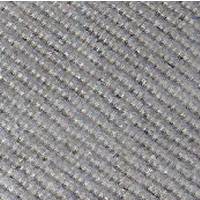
One of the three fundamental types of textile weaves alongside satin and plain weave. It is characterized by a pattern of diagonal, parallel ribs on the front and a plain aspect on the back.
The cross direction is perpendicular to the machine direction, that is, to the direction in which the fabric travels. On a fabric, the cross direction follows the weft threads, across the width. The width of a pouch is therefore defined against the cross direction of the fabric used. That is why the width of the roll limits the maximum width of the packaging: beyond it, two pieces would have to be joined.
For fabric, the machine direction follows the warp thread, along the length of the weave. This notion looks technical. It has a direct consequence on the pouch, though. A fabric cut in the right direction keeps its dimensions and its drape. Cut the wrong way, it may relax or twist in use. Compare this term with the cross direction.
One of the three fundamental types of textile weaves alongside plain weave and twill weave. It is a resistant fabric with invisible weft threads. The front offers a smooth and shiny finish and the back is mat.

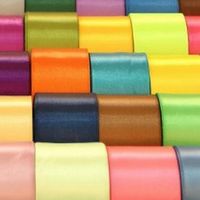
This is a varyingly thin strip of fabric. We use satin or cotton ribbon for bags.
A ribbon is a more or less narrow strip of fabric. For pouches, we use satin or cotton ribbon. Most of the time, the ribbon acts as the tie that closes a classic pouch. On a flap pouch, it can be tied into a knot that adds a gift-like touch to the look. Our colour charts show satin, cotton, chevron and metallic ribbons, to match the fabric. .
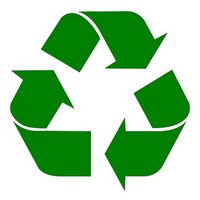
In most cases, a Möbius loop printed on packaging means that the packaging is recyclable. It can also state that the product contains recycled materials. In that case, the symbol comes with the word ‘recycled’. Today, the Triman pictogram tends to replace it by adding the sorting information.
RGB stands for Red, Green and Blue in English; in French, RVB for Rouge, Vert, Bleu. It is a colour definition mode designed for screens. It is absolutely unsuitable for printing: the shades will not be respected. A graphic file in RGB mode must be converted to CMYK.
– see DPI – The resolution of a document or digital image file is expressed in DPI (Dots Per Inch.) A good resolution (300 DPI minimum) is required to obtain a good printing quality.
Weaving derived from canvas with fine longitudinal ribs across the front and back of the woven fabric.
Consists in adding complementary text after printing. Example: personalization by subsequently printing the name and address of the distributor.