EU ecolabel
The European Union Ecolabel designates products that are environmentally friendly throughout their life cycle within the European Union. It aims to encourage the purchase of ecological products.


The European Union Ecolabel designates products that are environmentally friendly throughout their life cycle within the European Union. It aims to encourage the purchase of ecological products.
Burlap is a plant fiber obtained from the stem of a plant (corchorus.) The jue (burlap fiber) is silky, short (2.5 mm) and resistant.

A tight, washable and very strong cotton fabric made using a twill weave.

Jacquard is a weaving technique that weaves complex designs with yarns of different colours. The design is not printed on the fabric: it is the fabric. Each yarn goes up or down according to the design, which gives crisp, durable patterns that do not fade with washing or use. The name comes from
Joseph-Marie Jacquard, who automated this weaving in the early 19th century. In our fabric packaging production, jacquard is rarely used, unlike plain fabrics.
International Organization for Standardization. A body created in 1947 that produces international standards for industrial and commercial fields, known as ISO standards. The best-known standards are ISO 9001, which deals with quality management, ISO 14000, which deals with environmental management, and ISO/IEC 27001, which deals with information security management.

Screen printing is a printing technique that uses a fine-mesh screen stretched on a frame, placed between the ink and the substrate. Each colour passes through the open areas of the screen. It prints on various materials as paper, fabric, cardboard… It is the preferred technique for customizing fabric pouches and bags.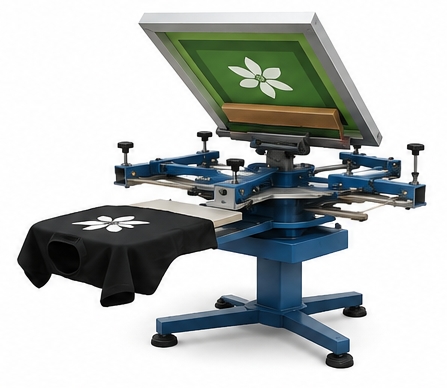
Four-colour process printing (or CMYK printing) is a printing method, like offset, that reproduces a wide range of colours using four base inks: cyan, magenta, yellow, and black, known by the acronym CMYK.
By overlapping or juxtaposing these four inks as tiny dots—called the halftone screen—they blend directly in the viewer’s eye to recreate the illusion of a full-color image. This is the standard technique used for printing magazines, books, and packaging.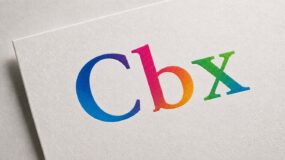
It is a direct reproduction process from digital data which uses neither printing plates (offset printing) nor screens (screen printing.) It is a quick quality printing process for very small or large quantities of different models with minimal make-ready times. Its lower set-up costs allow for small-quantity competitive prices.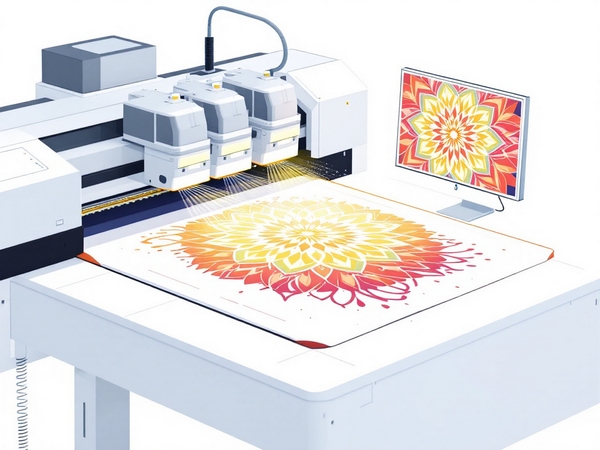
Process of impressing a drawing, image or text onto a support (paper, cardboard, fabric.) There are different printing methods but the main ones used in packaging are: offset, screen printing, digital, flexography and gravure printing.
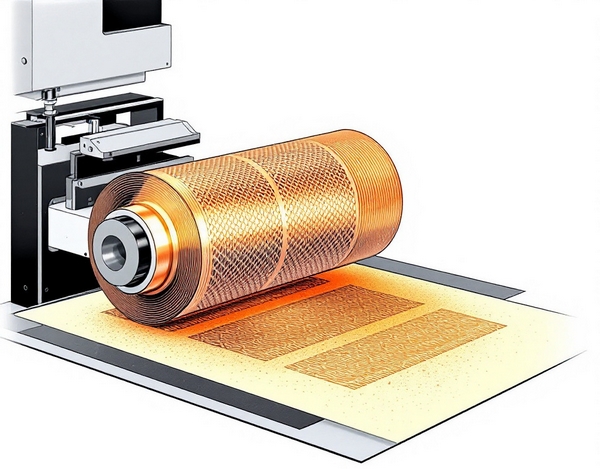
Rotogravure prints with a cylinder engraved in relief cells: the ink fills the cells, a blade wipes off the rest, and the substrate picks up the ink. It is a very long-run process on paper and films. This process is not suitable for fabric packaging.